









'

Contact mail: pmi@pie.nl

vFFR

The proven angio based functional and anatomical lesion assessment: wire and adenosine free

Request a demo

Proven
Outcomes

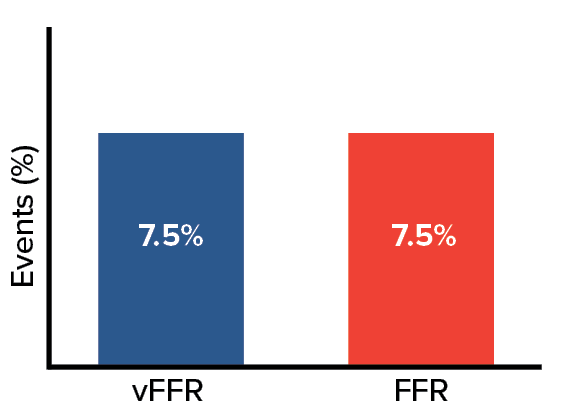
Fast III confirms vFFR is

non-inferior to FFR [1]

Simple &
Reproducible

Robust automated algorithm

Fast cath lab
workflow

5x Faster than FFR [2]

Improved patient
comfort

No wire and hyperemic agent, less radiation exposure and contrast [1]

Faster procedures. Wire-Free. Similar outcome.

5x Faster [2]

94% Diagnostic accuracy [3]

Non-inferior to FFR [1]

r=0.95 Correlation
between observers [4]

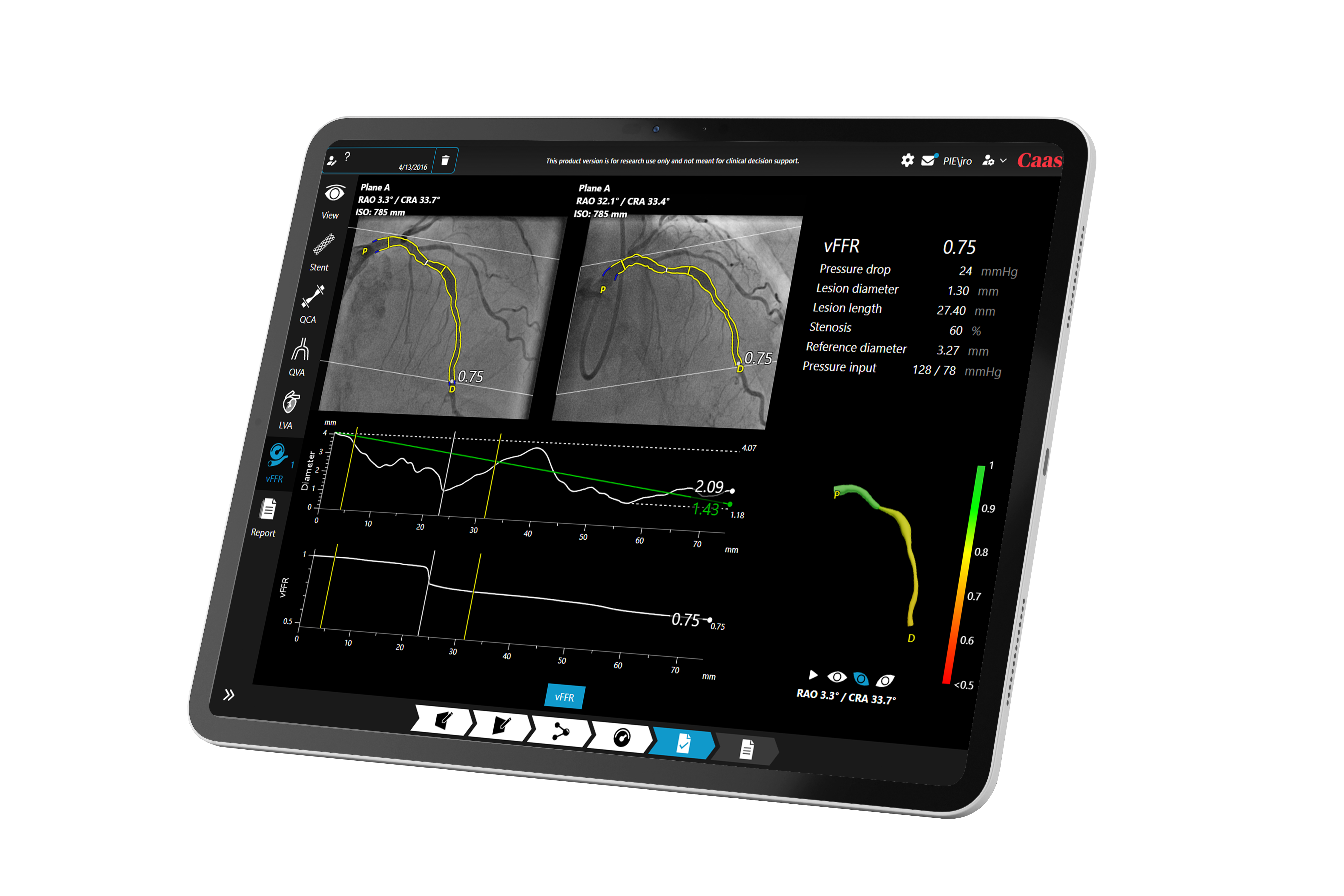
Functional Lesion Information

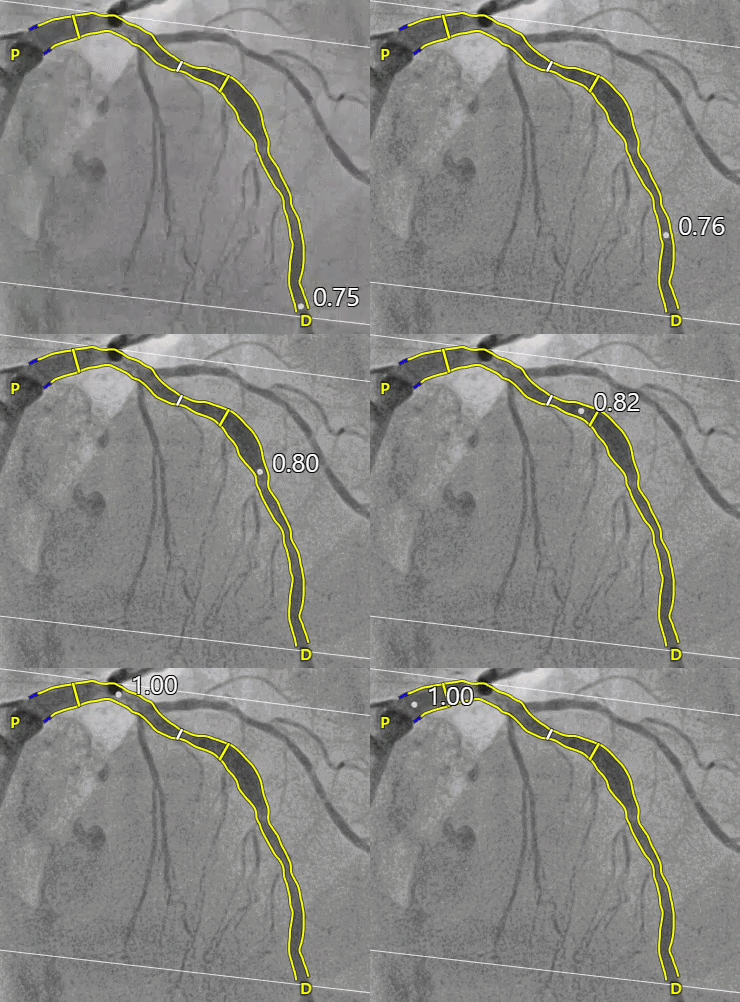
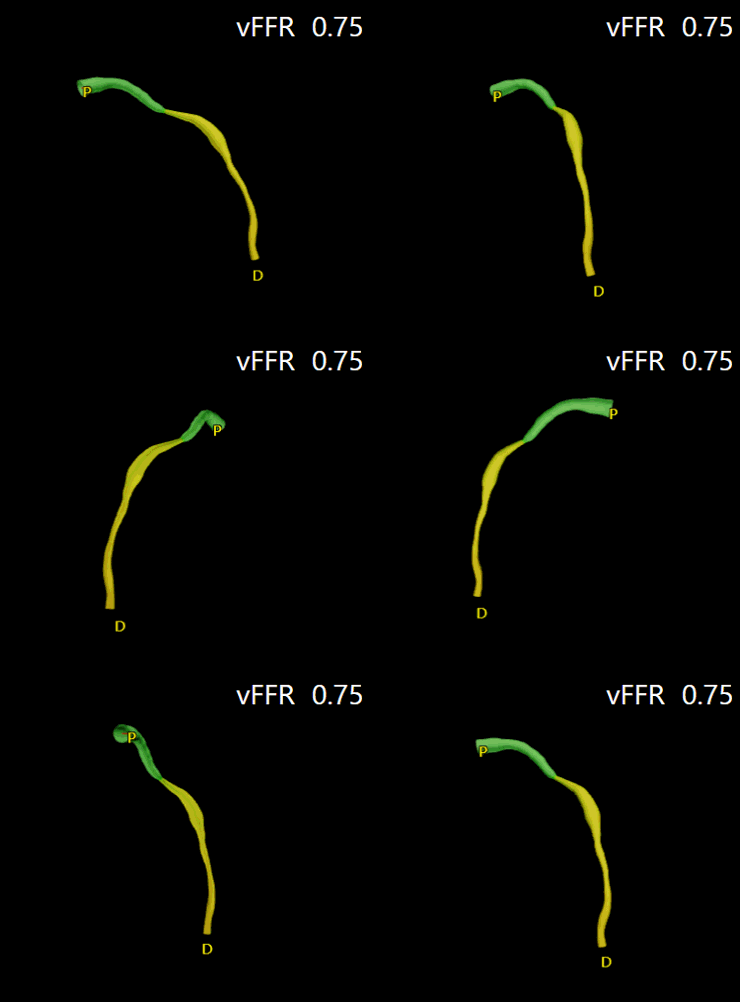
Based on just 2 standard angiograms and the patients aortic root pressure, vFFR builds a 3D reconstruction of the coronary artery and provides the functional lesion information

  • vFFR Pullback
  • 3D Model and vFFR value

Anatomical Lesion Information

Use the anatomical lesion information to support treatment planning!

  • Lesion diameter
  • Obstruction length
  • Percentage stenosis
  • Reference diameter

Treatment Planning


  • Simulate effect of stent placement with Residual vFFR* [5]
  • Optimize treatment strategy with understanding contribution of multiple lesions*
  • Ensure succesful revascularization and minimize future risks with post PCI vFFR assessment [6]

FAST I was a single center retrospective study evaluating the diagnostic accuracy to predict FFR ≤ 0.8 and reproducibility of vFFR.

Subjects
294
Patients

Diagnostic Accuracy (AUC)
0,94

Reproducibility (r)
0,95

between observers

The FAST II study was an international multi-center prospective trial in 6 countries (Netherlands, Germany, Italy, France, Unites States and Japan) evaluating the diagnostic accuracy to predict FFR ≤ 0.8 and reproducibility of vFFR in an in-hospital and off-line core laboratory setting.

Subjects
334
Patients

Diagnostic Accuracy (AUC)
0,93


Reproducibility (r)
0,87

between in-hospital and corelab

FAST III is an investigator-initiated study, sponsored by the European Cardiovascular Research Institute, and supported by research grants from Pie Medical Imaging and Siemens Healthineers. It is an open label, multicenter randomized trial comparing vFFR guided versus FFR guided coronary revascularization in patients with intermediate coronary lesions. The 1 year MACE defined as: the composite of all-cause death, any myorcardial infarction (MI), and any revascularization within one year after randomization.

Subjects
2235
Patients

Centers
37
 

Clinical end point
MACE at 1-year
follow up

Dr. Joost Daemen

“The results of FAST III confirm the safety and feasibility of the online use of vFFR as an easy to use minimally invasive tool to guide revascularization in patients with intermediate coronary artery lesions in need of physiological lesion assessment. The use of vFFR eliminates the need for guiding catheters, invasive coronary artery instrumentation and hyperemic agents with inherent risks and patient discomfort.”

Dr. Joost Daemen
Principal investigator FAST III

Product Video

Clinical Evidence

vFFR Time

Asset 9.png  225 Lesions

accuracy icon.png  Diagnostic Accuracy: 0.92

Asset 8.png  ~ 14 min faster than wire-based FFR

vFFR vs NHPR

vFFR vs RFR 

Asset 9.png 986 Lesions

accuracy icon.png Diagnostic Accuracy (AUC=0.916)

vFFR Reproducibility

Asset 9.png  334 patients 

Asset 7.png  ​​​​​​​Correlation between observers (r=0.89)

* The regulatory approval status of CAAS Workstation or any of its features may vary per region. Please contact: regulatory@pie.nl to learn if clinical use of CAAS Workstation or any specific features is allowed in your region


  • [1] Joost Daemen et al. Angiography-Based Physiology to Guide Coronary Revascularization, New England Journal of Medicine. 2026 doi:10.1056/NEJMoa2601841
  • [2] D.Akrawi, et al., “VERMONT: Vessel Fractional Flow Reserve (vFFR) Assessment of Stenosis Severity: A Prospective Study,” Catheter Cardiovasc Interv. (2025)
  • [3] Neleman et al. Extended Validation of Novel 3D Quantitative Coronary Angiography-Based Software to Calculate vFFR: The FAST EXTEND Study. JACC Cardiovasc Imaging. 2021
  • [4] Masdjedi et al. Vessel fractional flow reserve (vFFR) for the assessment of stenosis severity: the FAST II study. EuroIntervention 2022
  • [5] Tomaniak M, et. al. Diagnostic Accuracy of Coronary Angiography-Based Vessel Fractional Flow Reserve (vFFR) Virtual Stenting. J Clin Med. 2022
  • [6] Masdjedi et al. Validation of novel 3‐dimensional quantitative coronary angiography-based software to calculate fractional flow reserve post stenting. Catheter Cardiovasc Interv. 2020
  • [7] Masdjedi et al. Validation of 3-Dimensional Quantitative Coronary Angiography based software to calculate Fractional Flow Reserve: Fast Assessment of STenosis severity (FAST)-study. EuroIntervention 2019

Optimize your
cath lab workflow

Explore how vFFR accelerates your diagnostic workflow while maintaining the accuracy your patients deserve. A smarter way to assess lesions starts here.

Request a free demo